Victoriahöfe Berlin
Architectural Gem
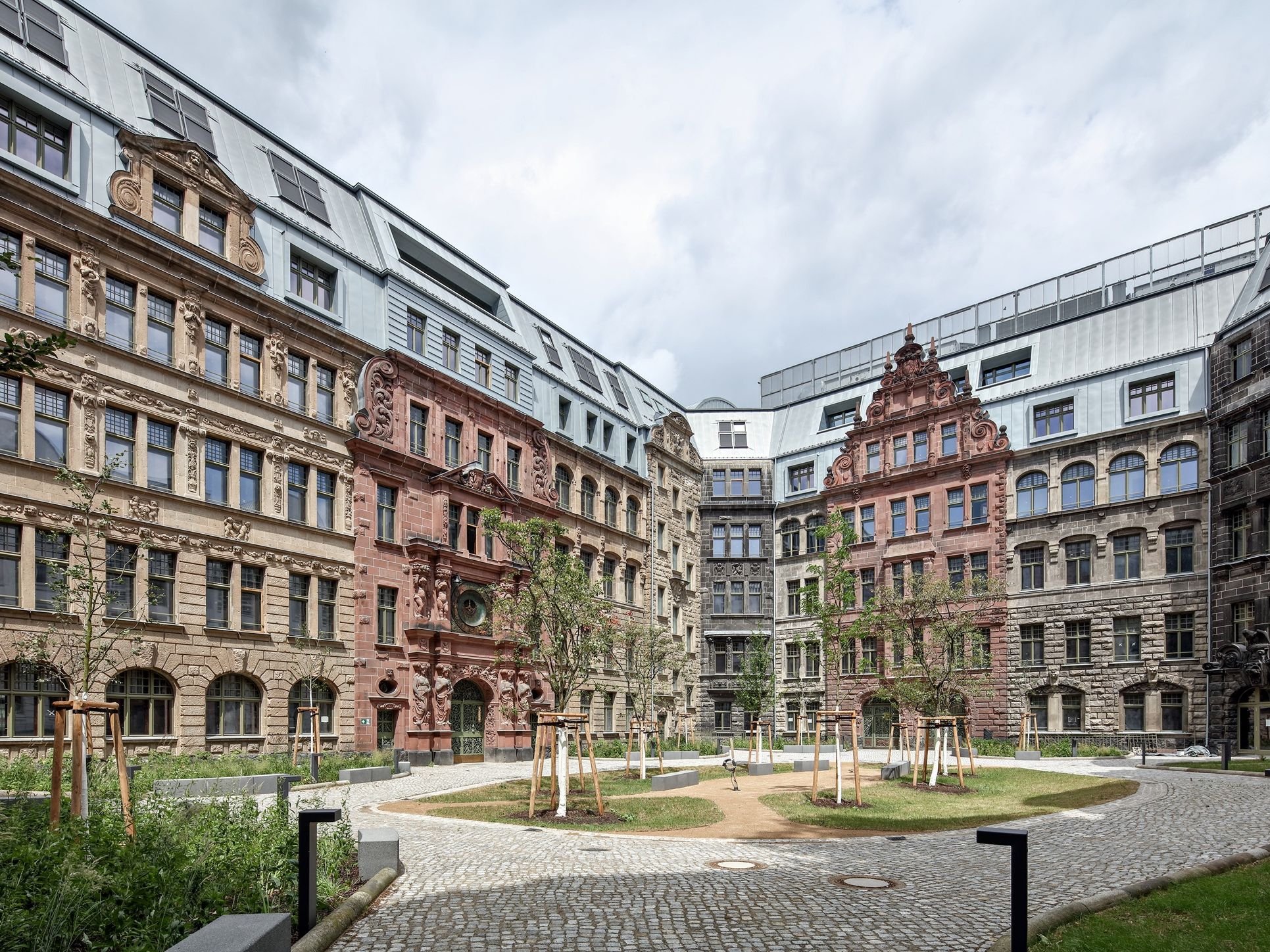
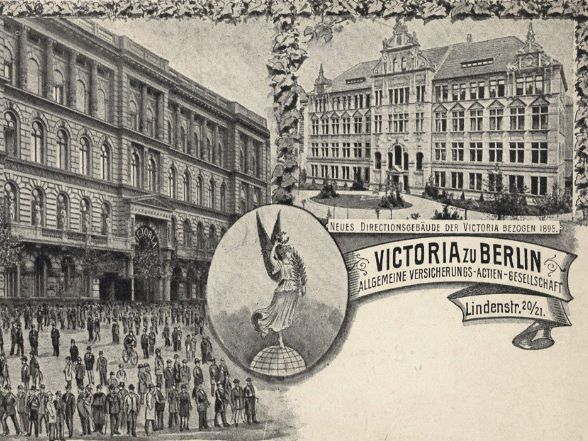
The Victoriahöfe in Berlin-Kreuzberg are among the capital’s most outstanding revitalization projects. Built between 1893 and 1913 as the headquarters of the Victoria Insurance Company, the building was considered one of the most innovative and largest office buildings of its time. Today, the impressive, 130-meter-long facade and the preserved side wings define the historic ensemble. As part of the careful renovation, carried out in close coordination with the State Office for the Preservation of Historical Monuments, historical elements such as natural stone facades and metalwork are being restored true to the original. The roof and parts of the facade, on the other hand, have been reinterpreted in a contemporary architectural style. RHEINZINK-prePATINA ECO ZINC in blue-grey was used for the high-quality cladding—thus creating a successful blend of historic architecture and modern design.
Click here to view the content
Table of contents
History
History of the Victoriahöfe
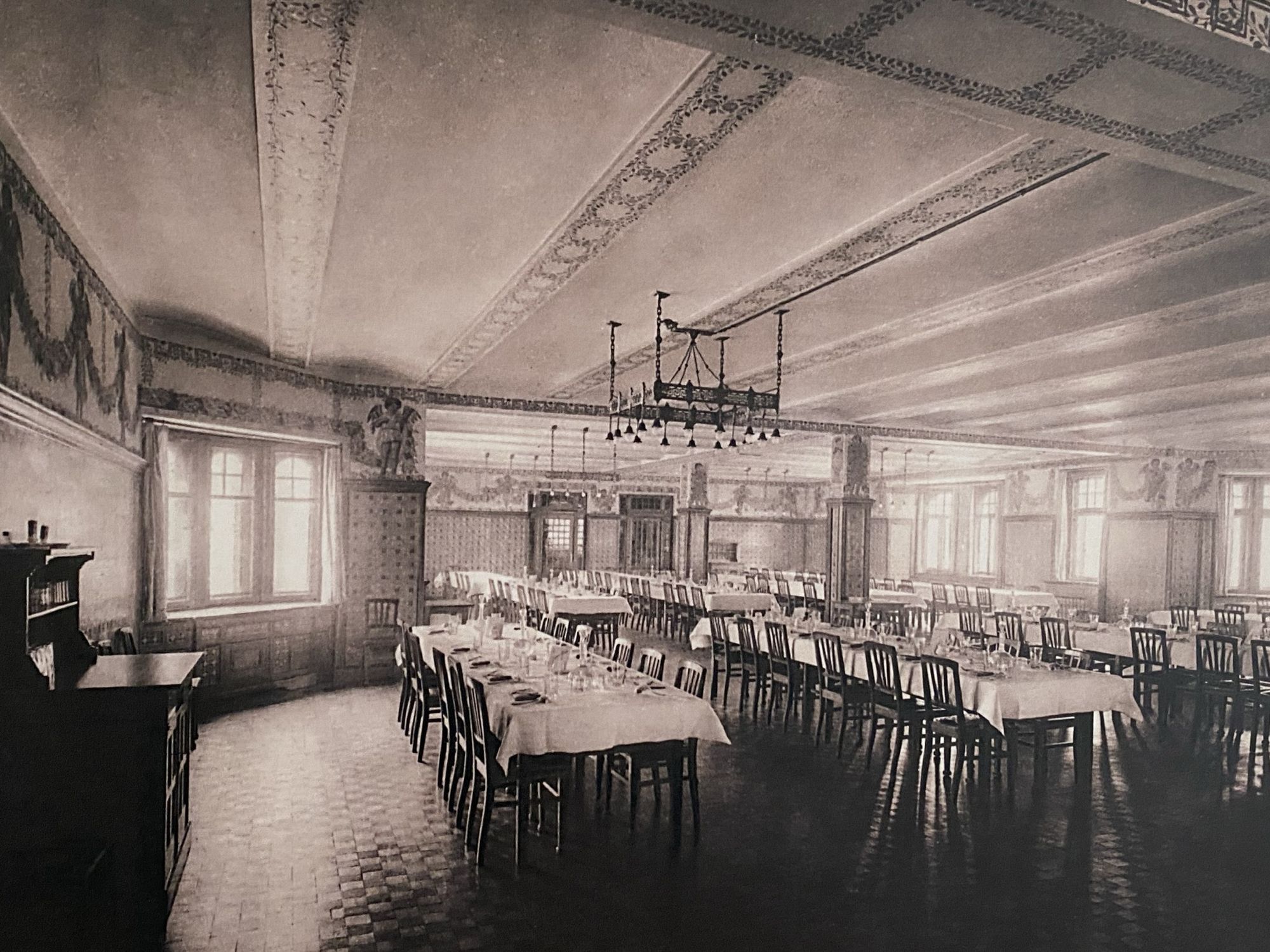
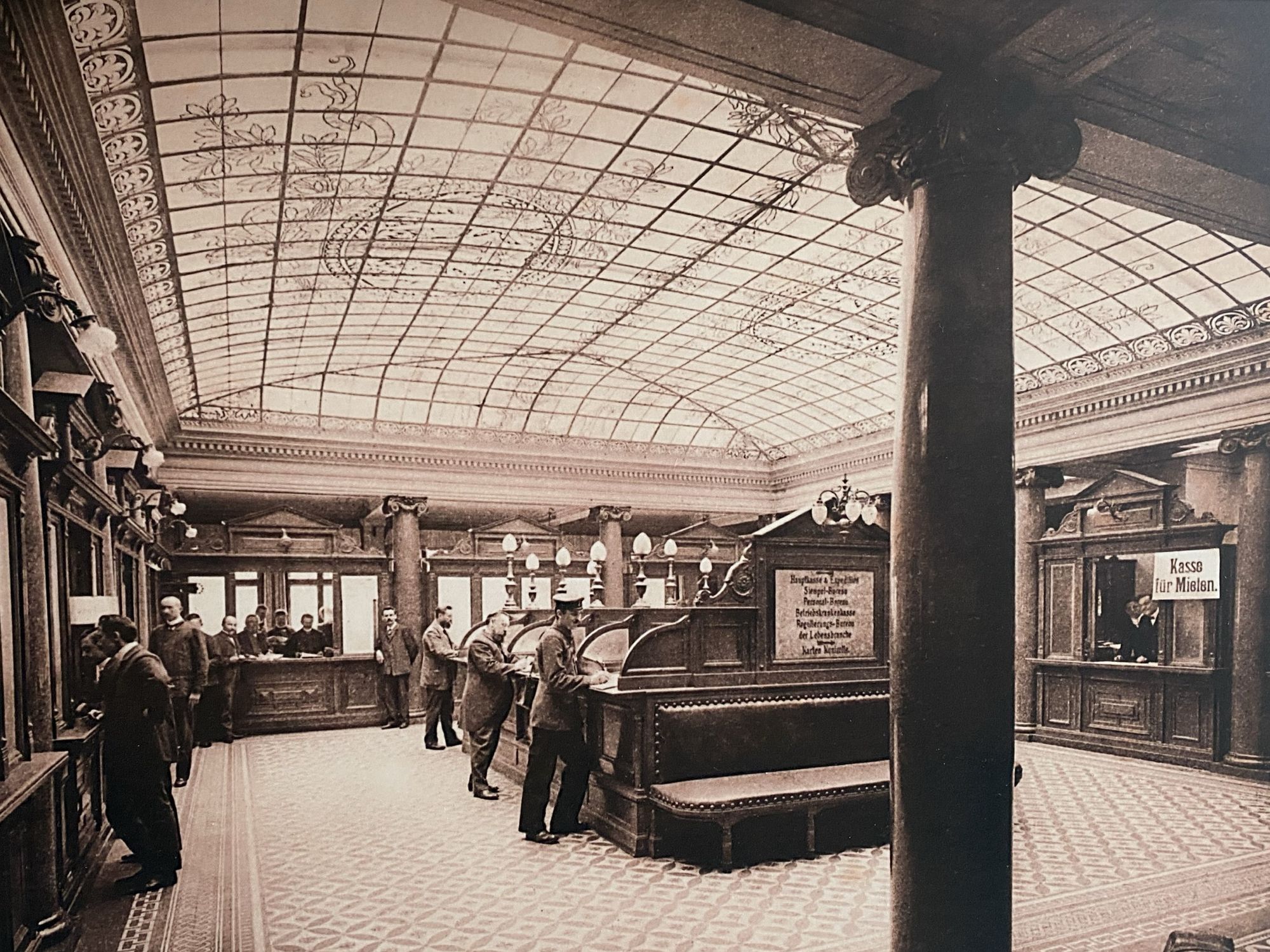
When the complex in Berlin-Kreuzberg was completed in 1913, it was considered one of the largest administrative buildings in the world: The monumental headquarters of Victoria Insurance was arranged around twelve courtyards and, behind its palatial facades, housed the workspaces of up to 3,200 “office clerks,” as they were still called at the time. After the destruction of World War II, only about one-third of the original structure remained. Moreover, war damage to the upper floors had been repaired in a very rudimentary manner that did little justice to the building’s style. Yet the surviving facade, approximately 130 meters long, along Lindenstraße still gives a sense of the neo-Baroque splendor that architect Wilhelm Walther (1857–1917) had once designed and built for the insurance company.
Architecture
A new take on gables
Form. Function. History.
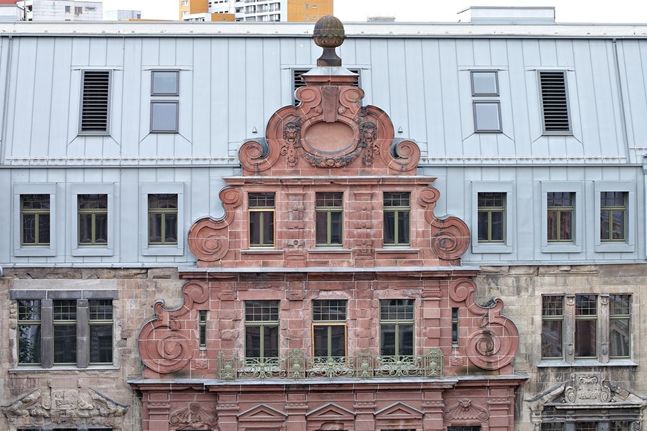
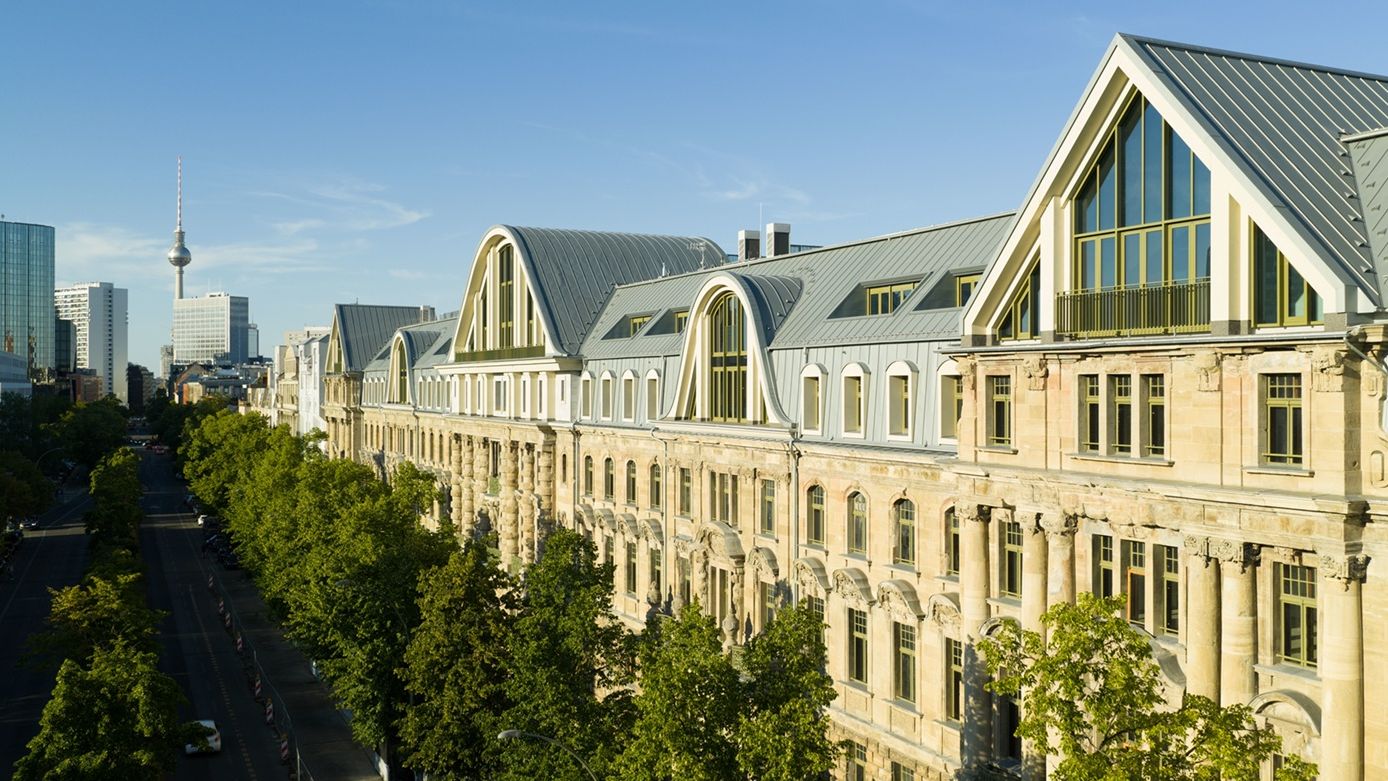
Wilhelm Walther had divided the long street front with a total of five projections, each topped by an opulent decorative gable. During repairs after 1945, these gables were removed and replaced with a continuous, completely unadorned top floor covered with roofing felt. As part of the current modernization, this postwar floor was completely demolished and replaced with a two-story reinforced concrete structure. This not only expanded the usable space within the building but also allowed for a complete redesign of the roofscape.
A New Interpretation of the Roofscape
Mansard. Gable. Modern.
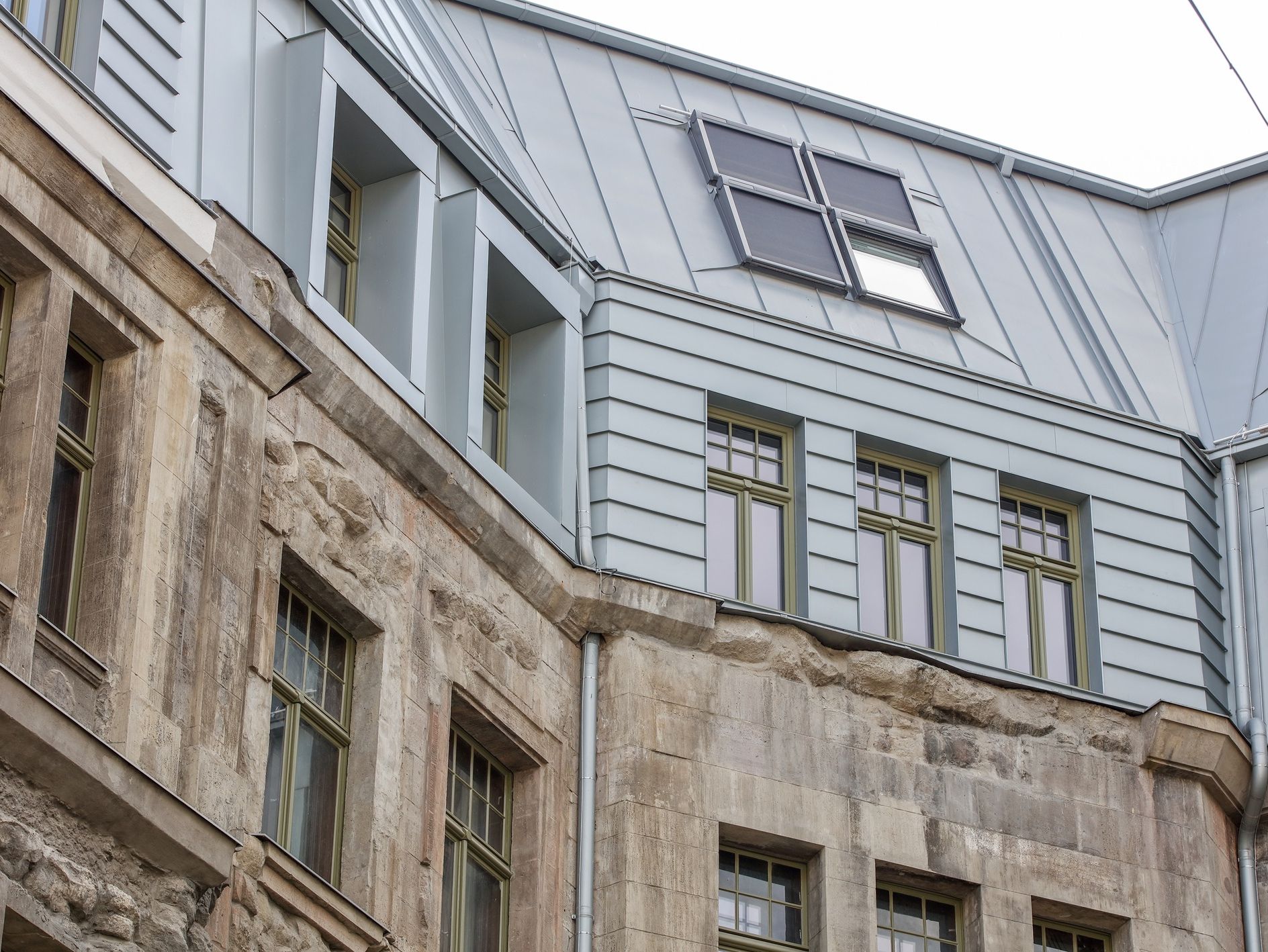
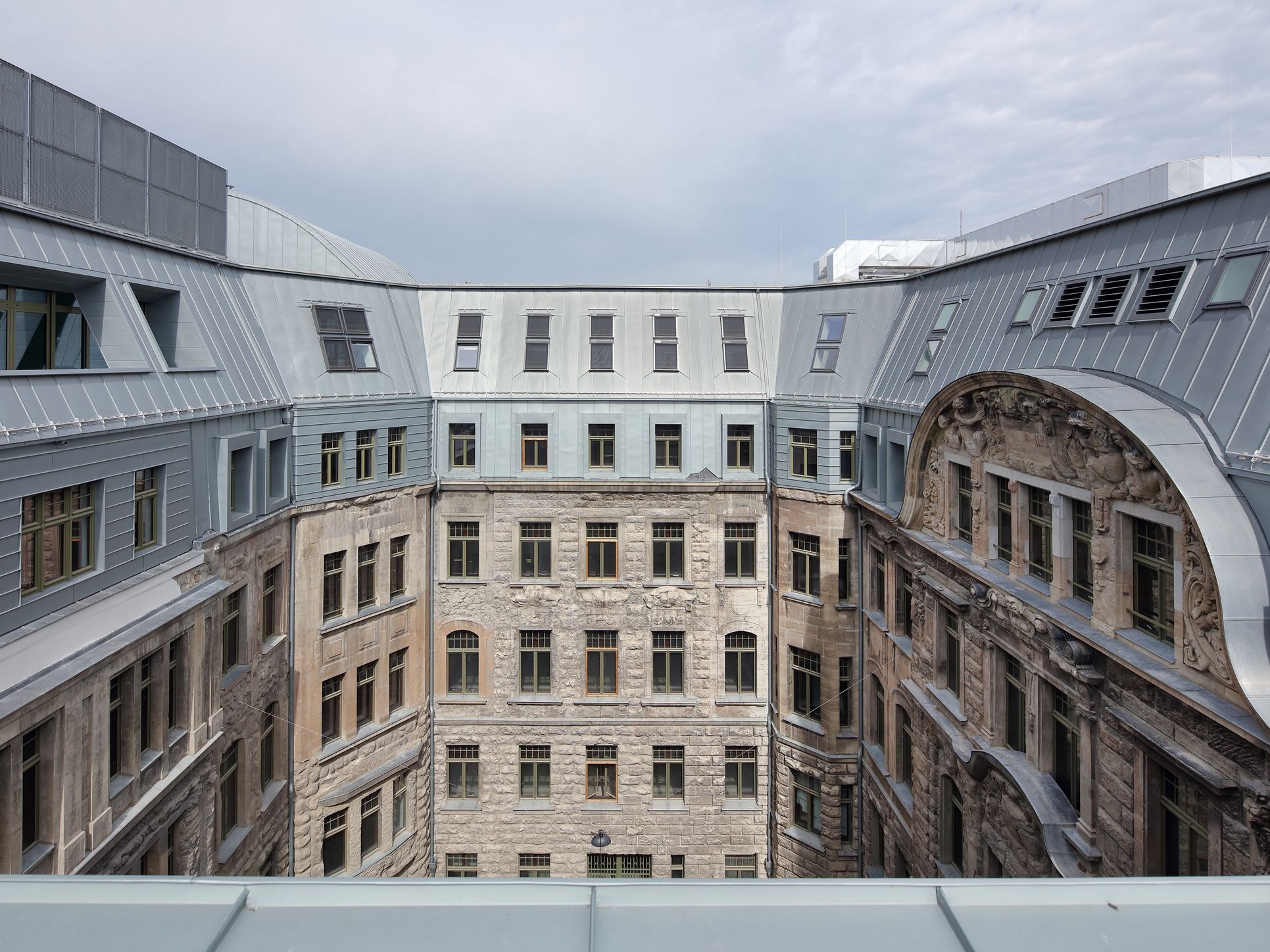
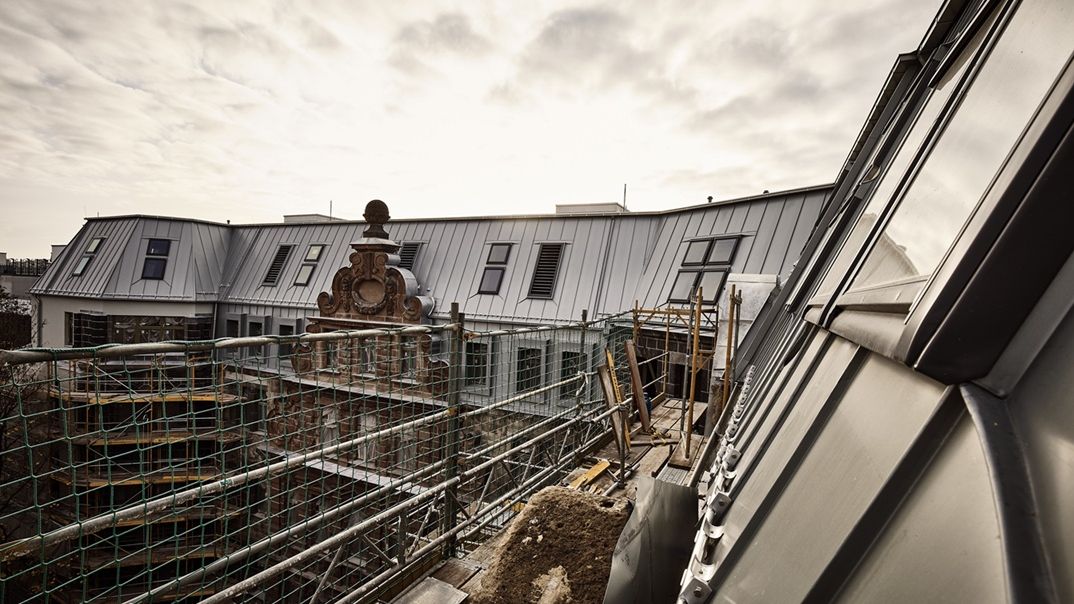
It is divided into the lower, steep mansard sections with a pitch of approximately 87° and vertical windows, as well as the main roof surfaces above them, which have a pitch of 45° on the courtyard side and 65° on the street side. A series of loggias is also integrated, along with skylights on the courtyard side.
The highlight of the roof design is the reinterpreted gables above the historic risalits, which are designed as roof peaks on the two outer sides and as strikingly rounded structures on the three gables in between. Beneath these curved sections, impressive event halls have been created with glass facades up to 8 m high and a breathtaking view over the rooftops of Berlin.
Beautiful details
Eclectic Architecture
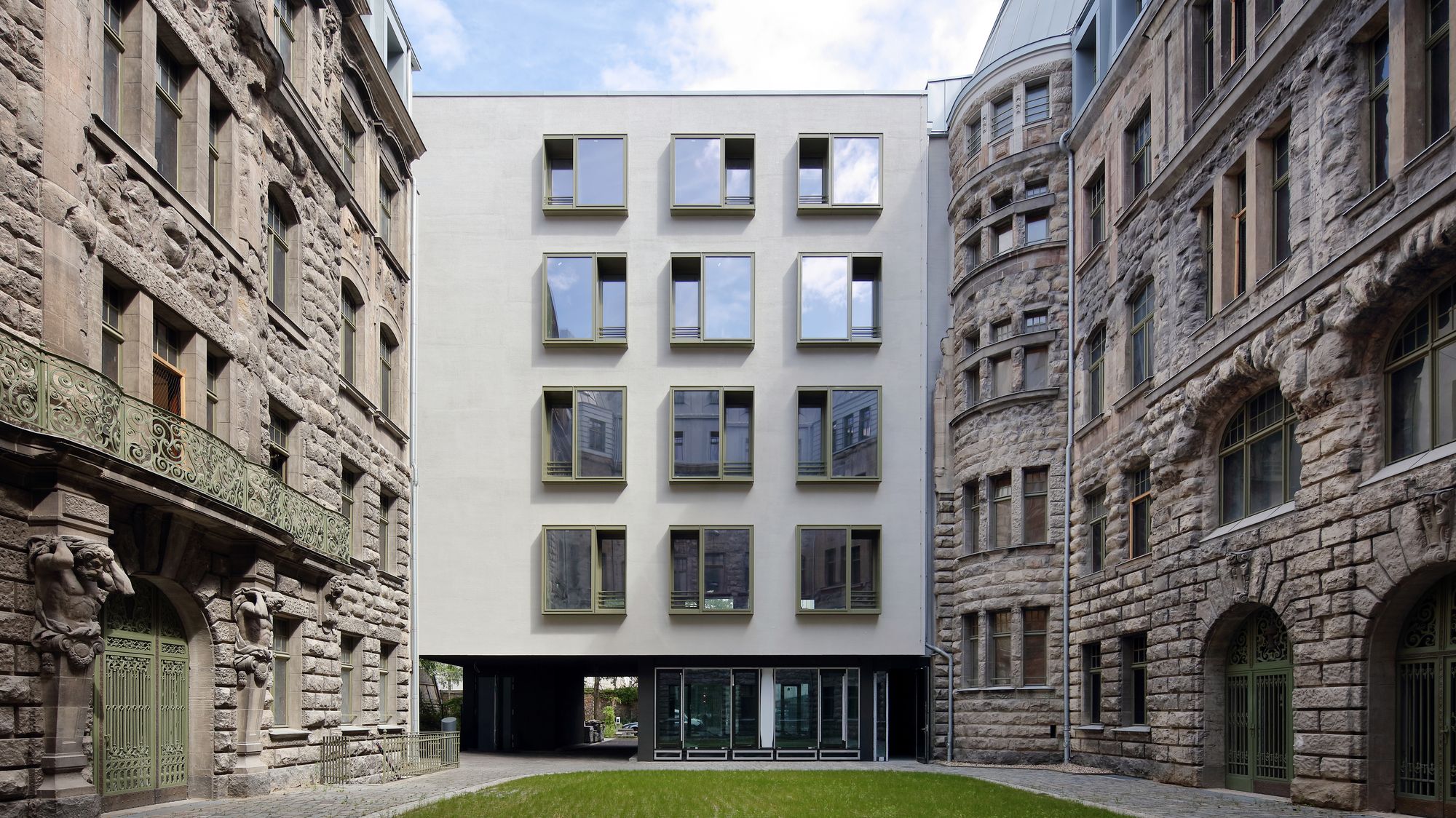
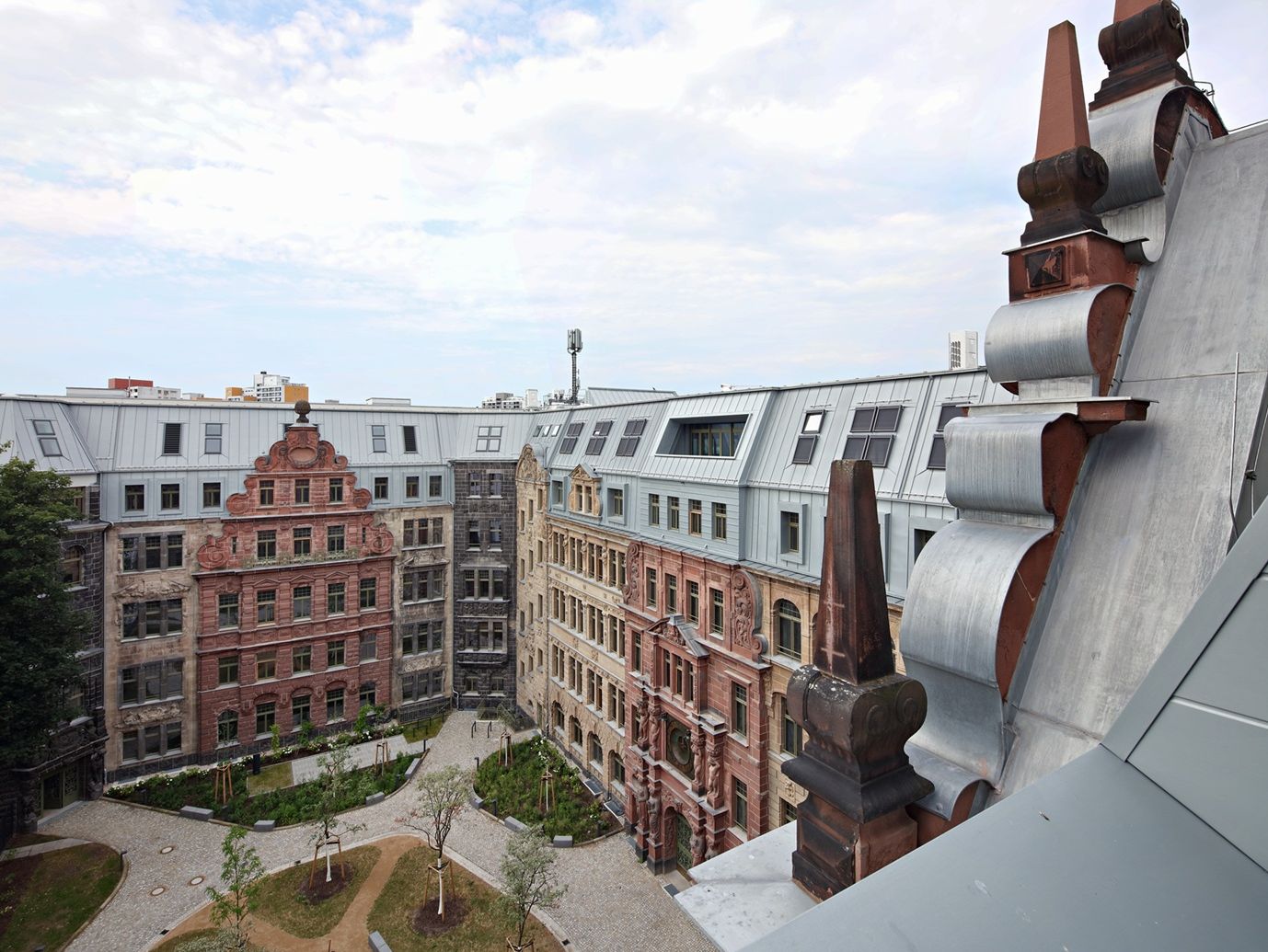
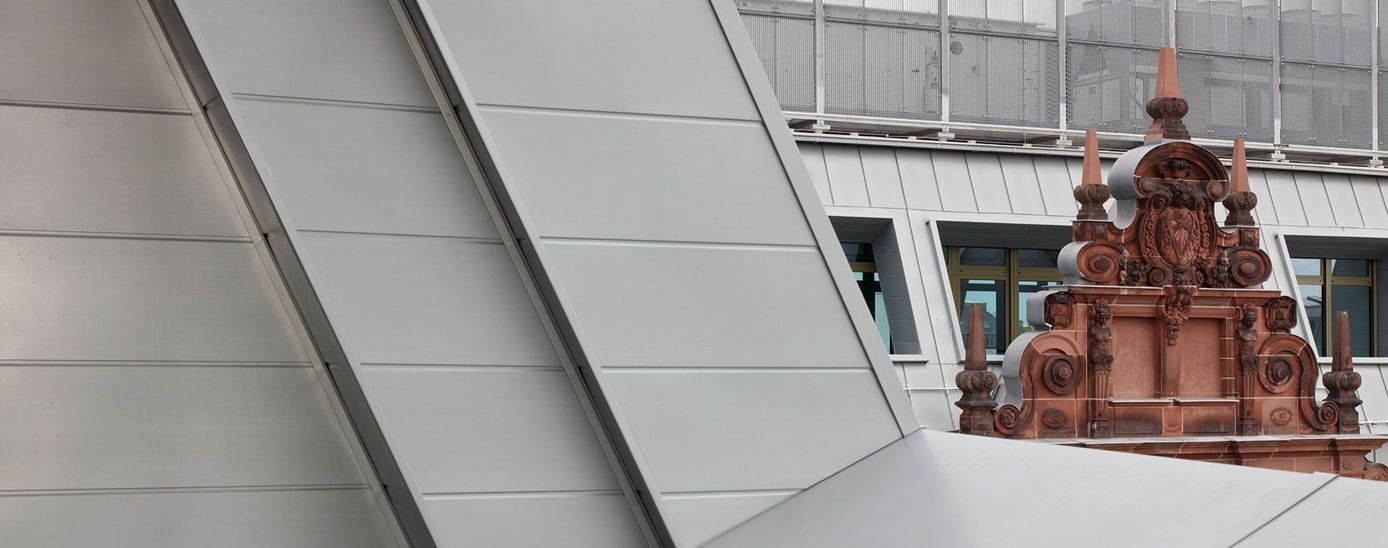
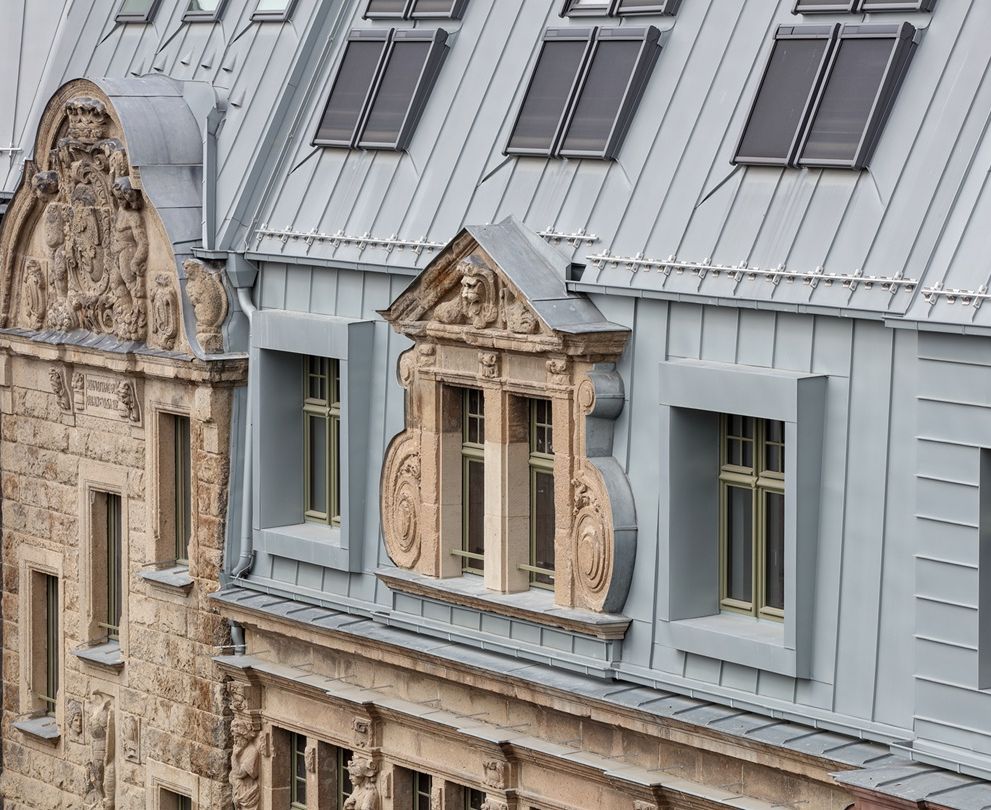
The Victoriahöfe Berlin combine historically protected Gründerzeit architecture with contemporary design, while deliberately preserving visible traces of their history. The carefully restored natural stone facades, original metal gates, and mosaics are defining features. The striking neo-Baroque gables along the street and courtyard risalits were removed after the war and reinterpreted in the current renovation with a contemporary, clean design language and in RHEINZINK-prePATINA ECO ZINC blue-grey. A two-story attic was created, reviving the original roofscape—with steep mansard roofs, loggias, and skylights that contrast with the austere facade structure. The new gables above the risalits feature barrel-vaulted arches. The roofing of the reinterpreted roofscape lends the ensemble a serene, timeless materiality.
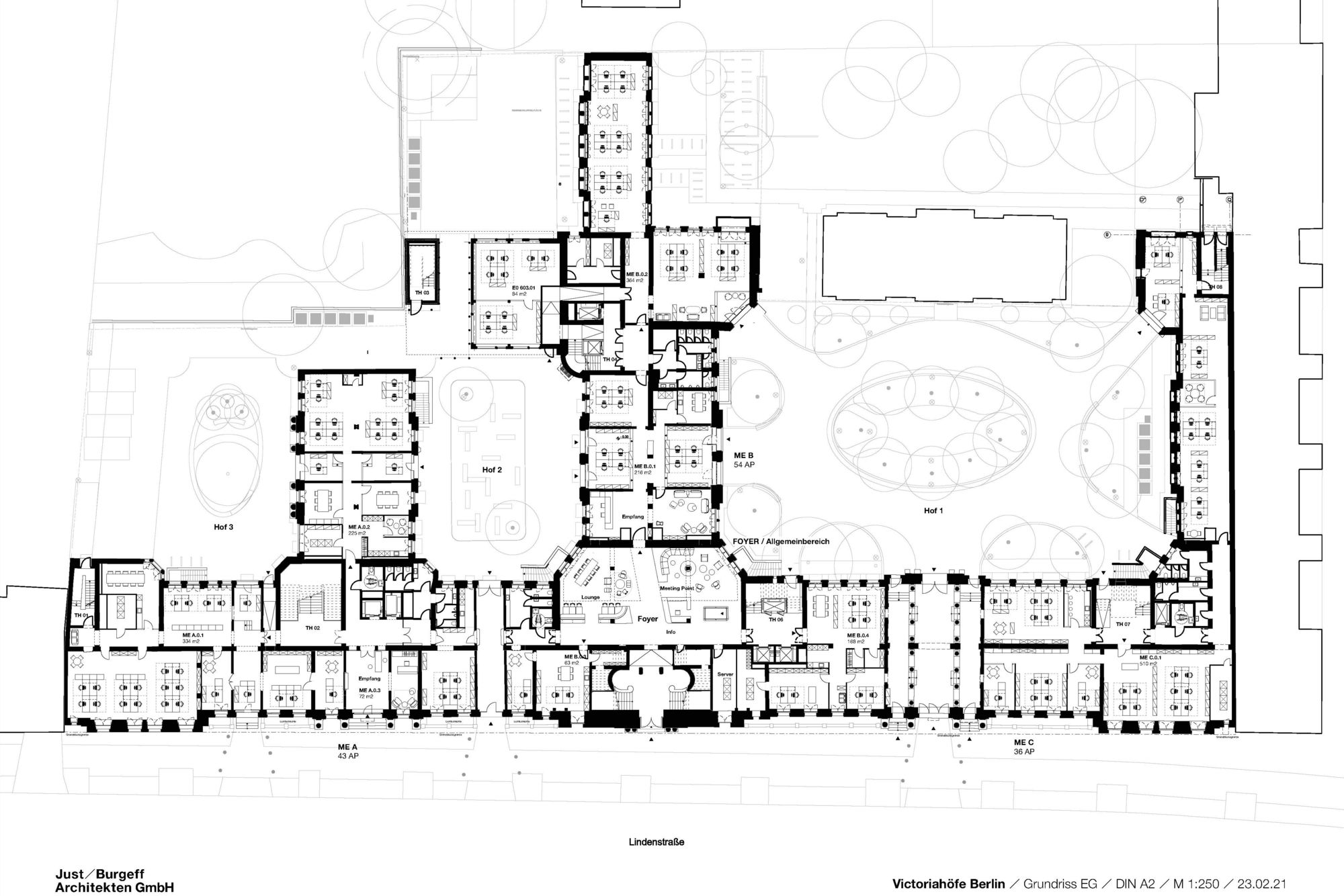
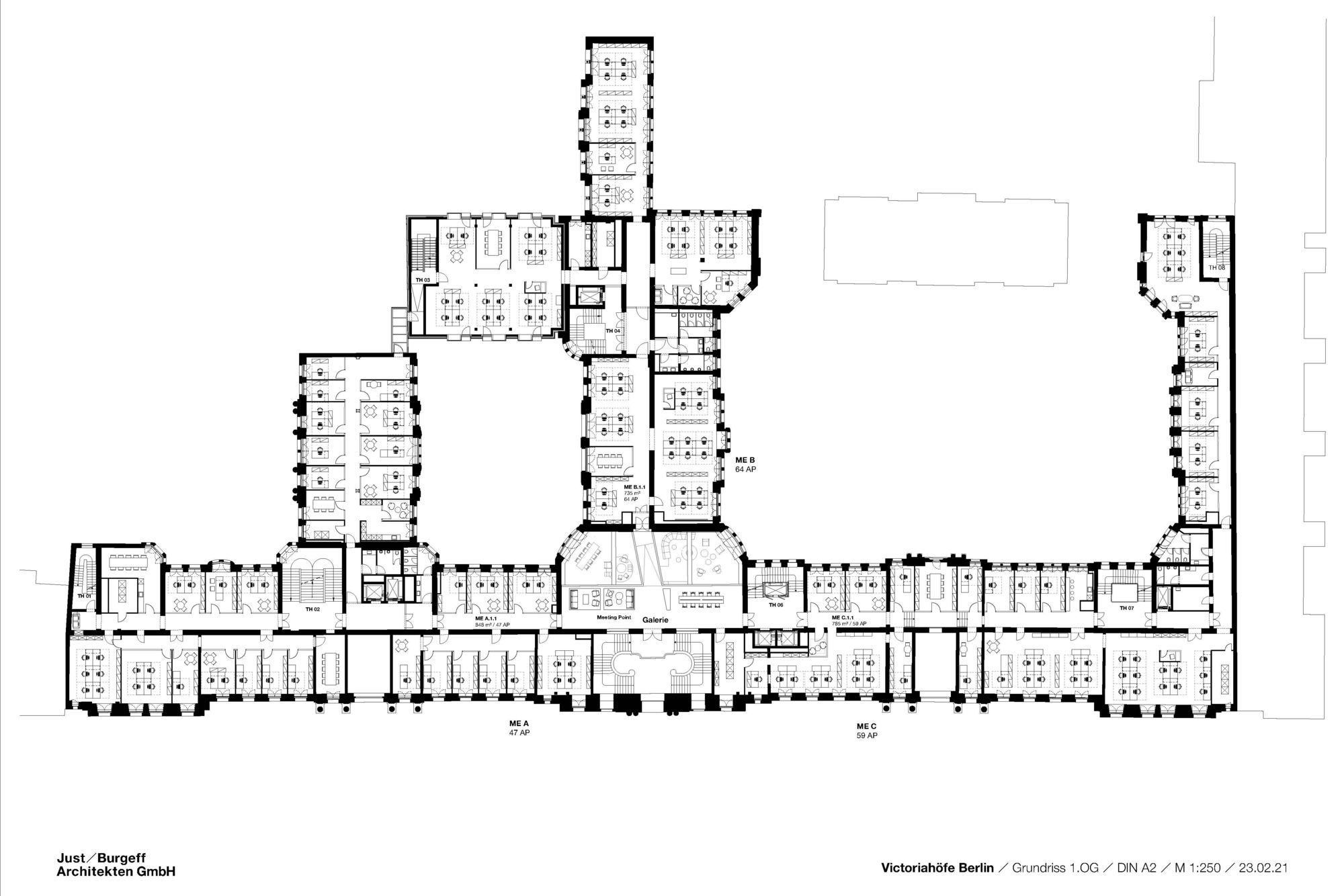
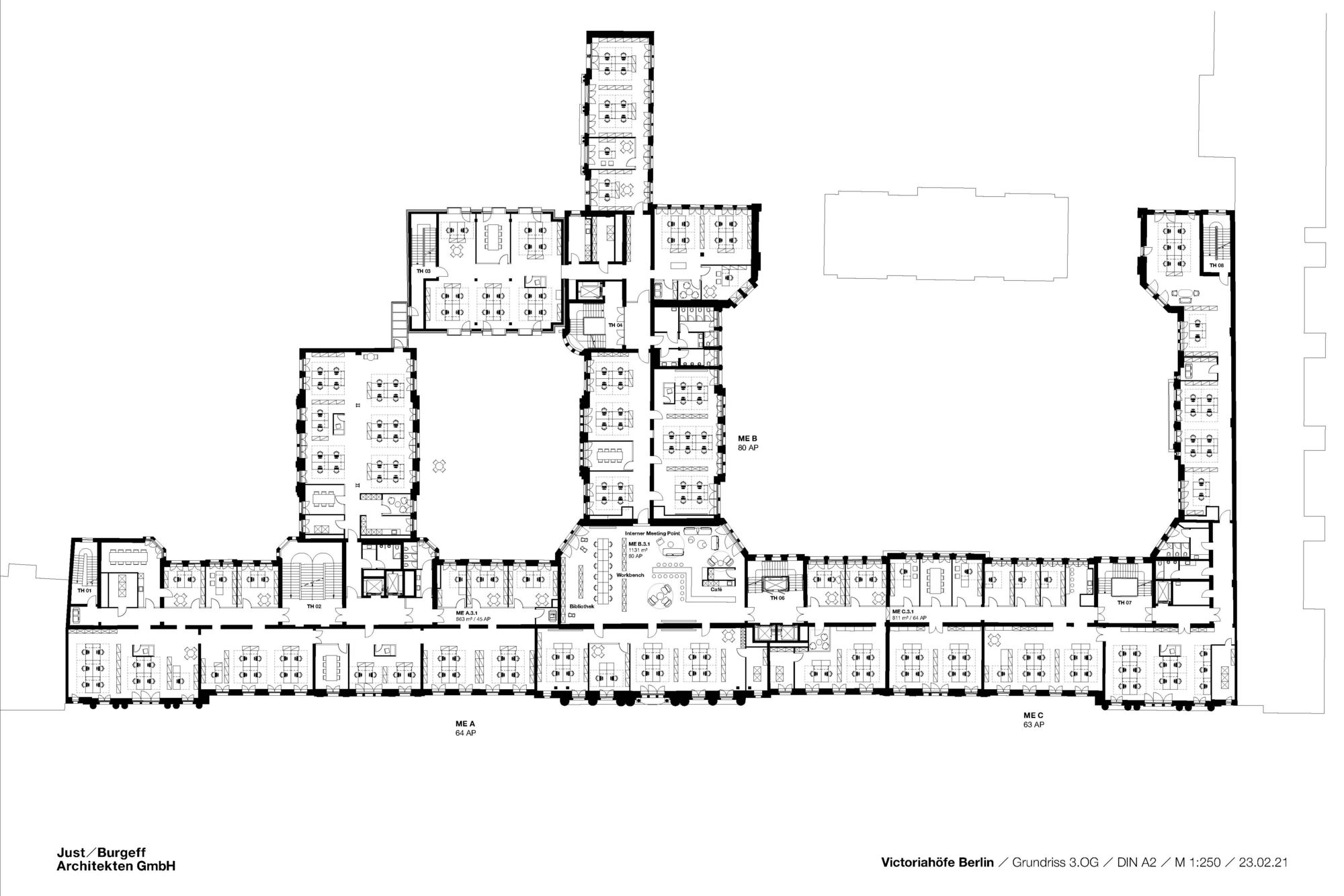
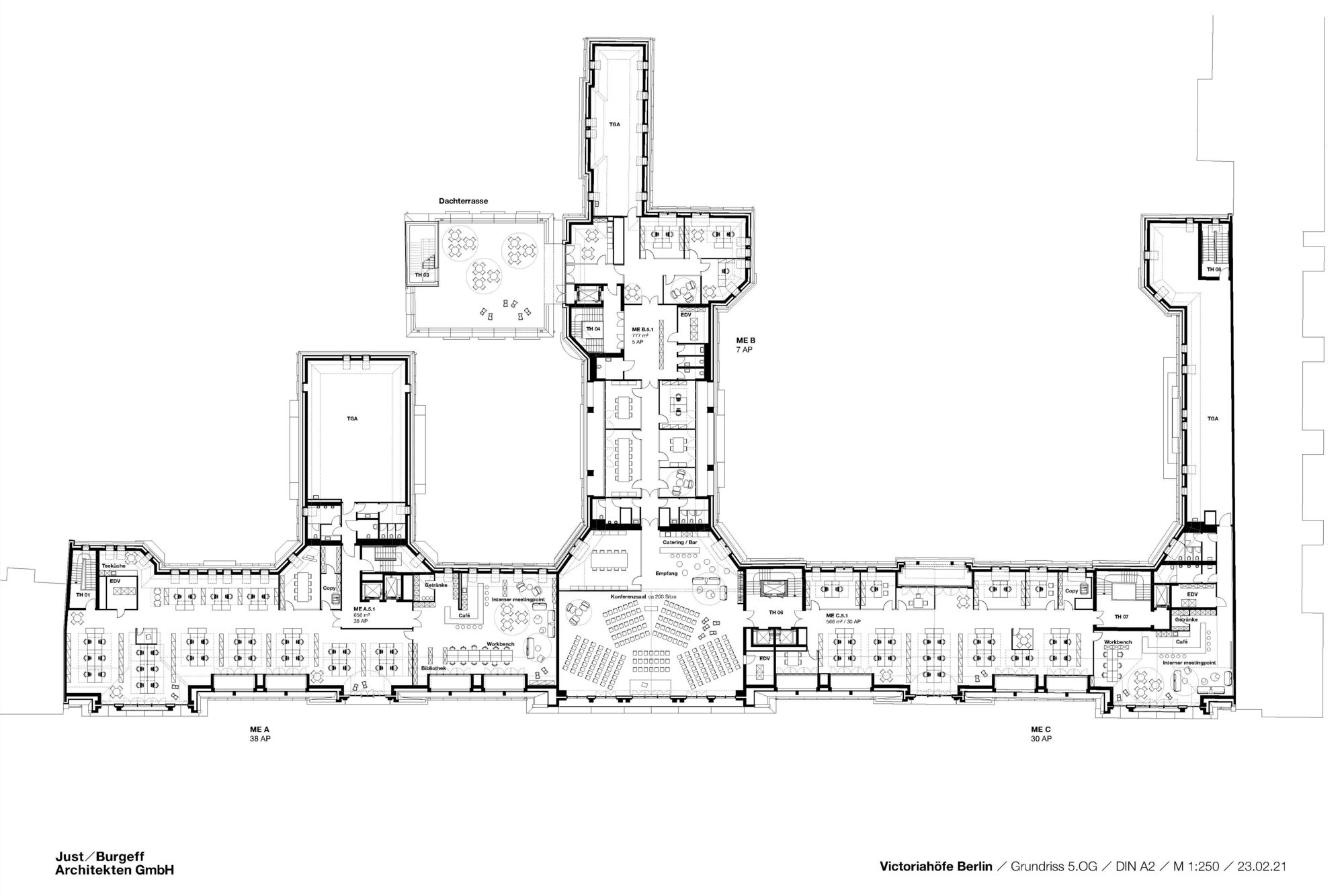
Grundrisse der Victoriahöfe
Impressive Interior Views
Interior Design Steeped in History
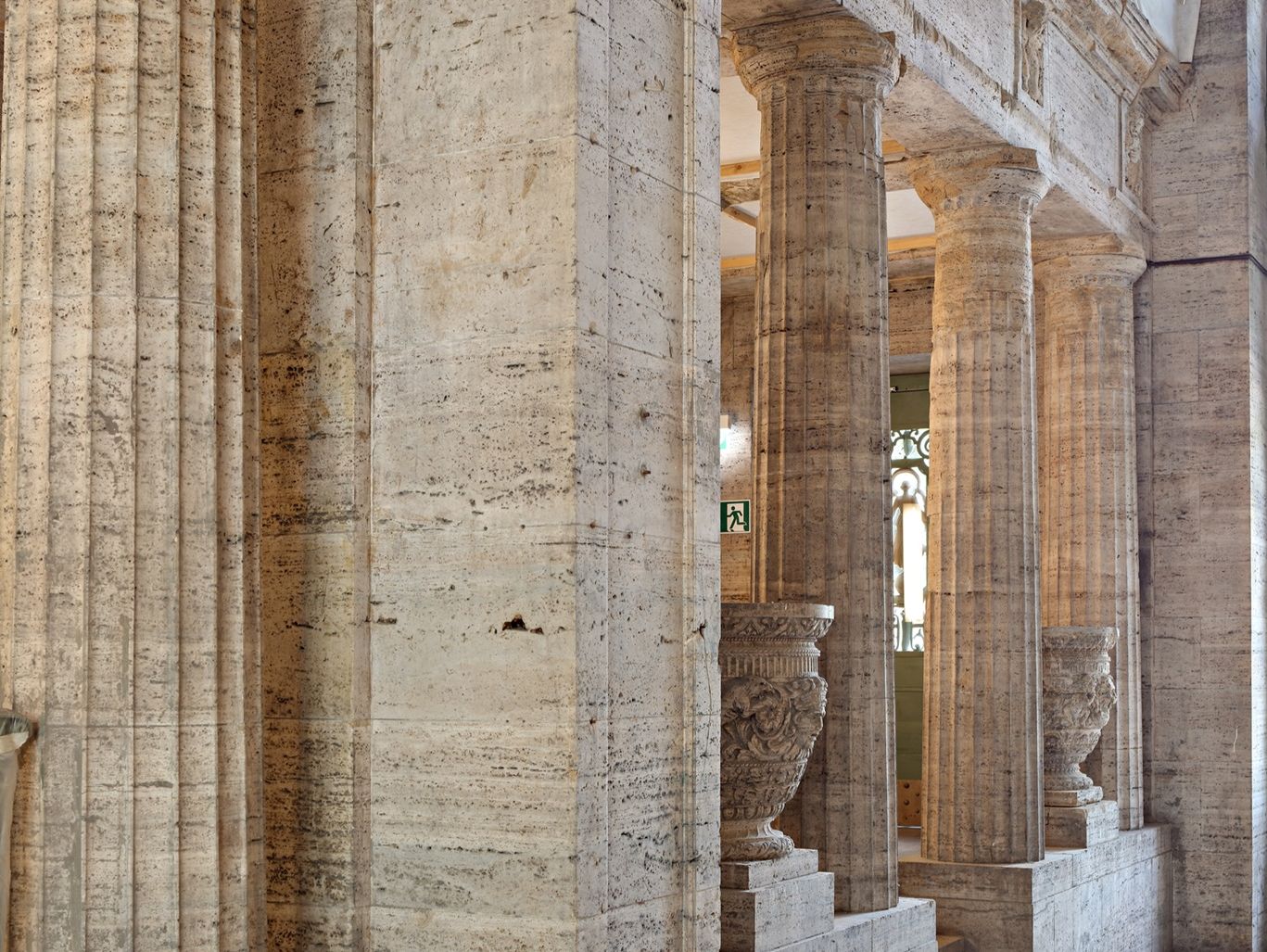
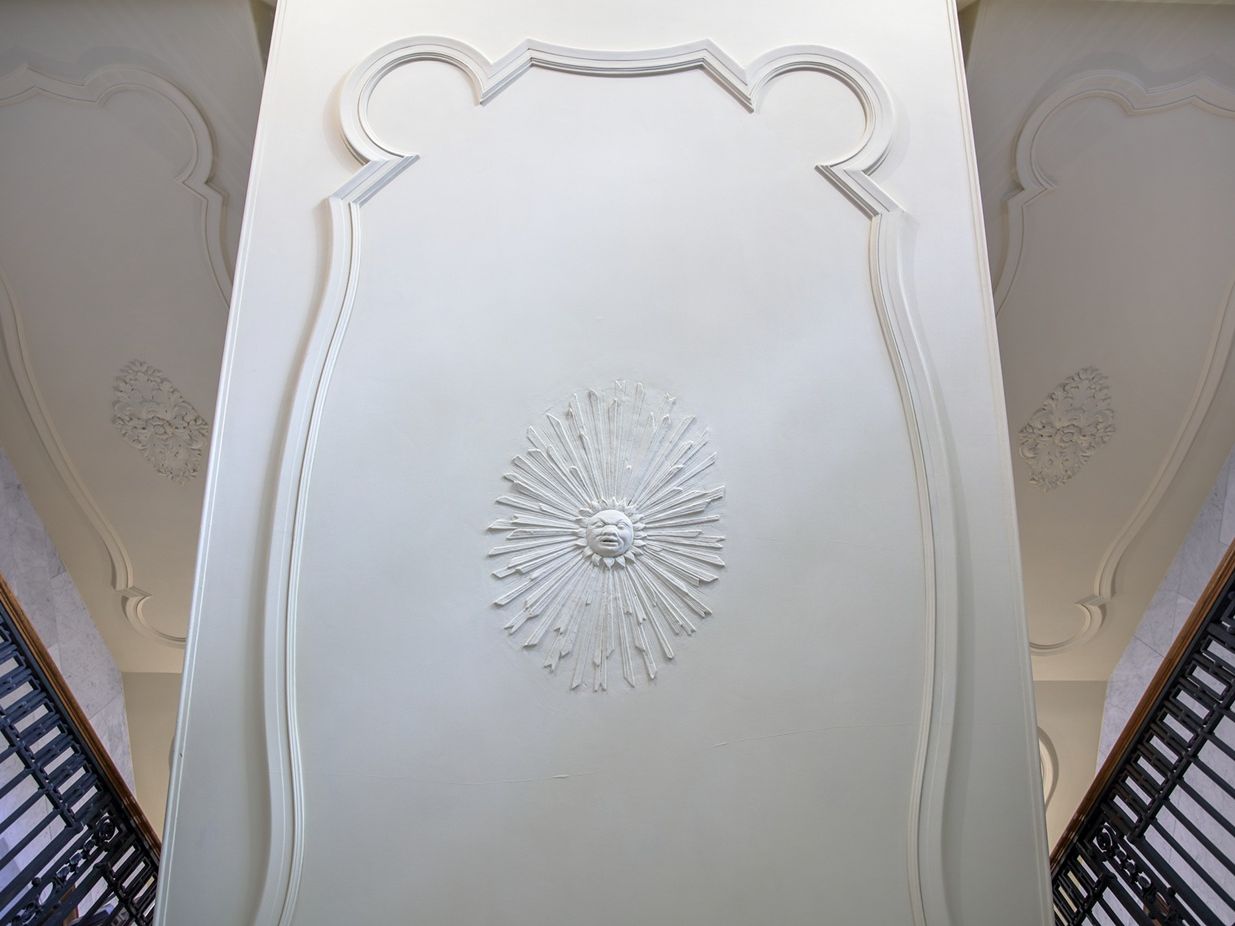
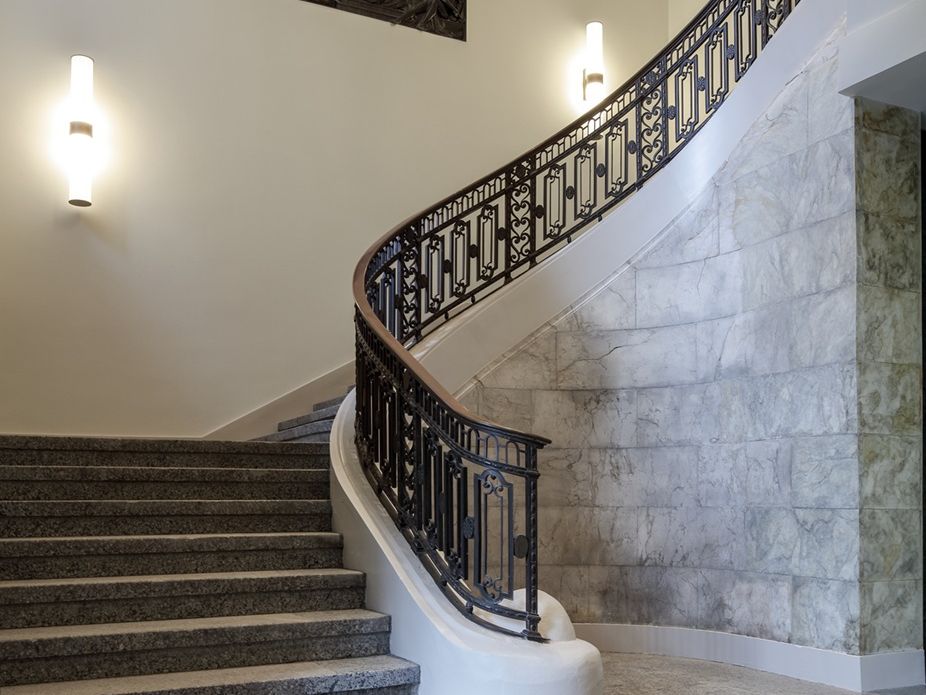
By blending the historic character of the building with modern architectural elements, the Victoriahöfe Berlin captivate visitors with their overall architectural design. Inside, the building impresses with opulent and finely crafted details that reflect the history and character of the building while also offering a contemporary interpretation of the original design concept.
Vision
The Idea Behind the Victoriahöfe
An Architectural Vision for Sustainable Urban Living
There were several visions for the Victoriahöfe, each with different uses and functions. In the video, Alexander Bürk of Cresco Capital and the craftsmen from the roofing company Holzapfel & Schulze discuss in detail the ideas and challenges involved in the revitalization project.
Material
Why RHEINZINK-prePATINA Eco Zinc blue-grey?
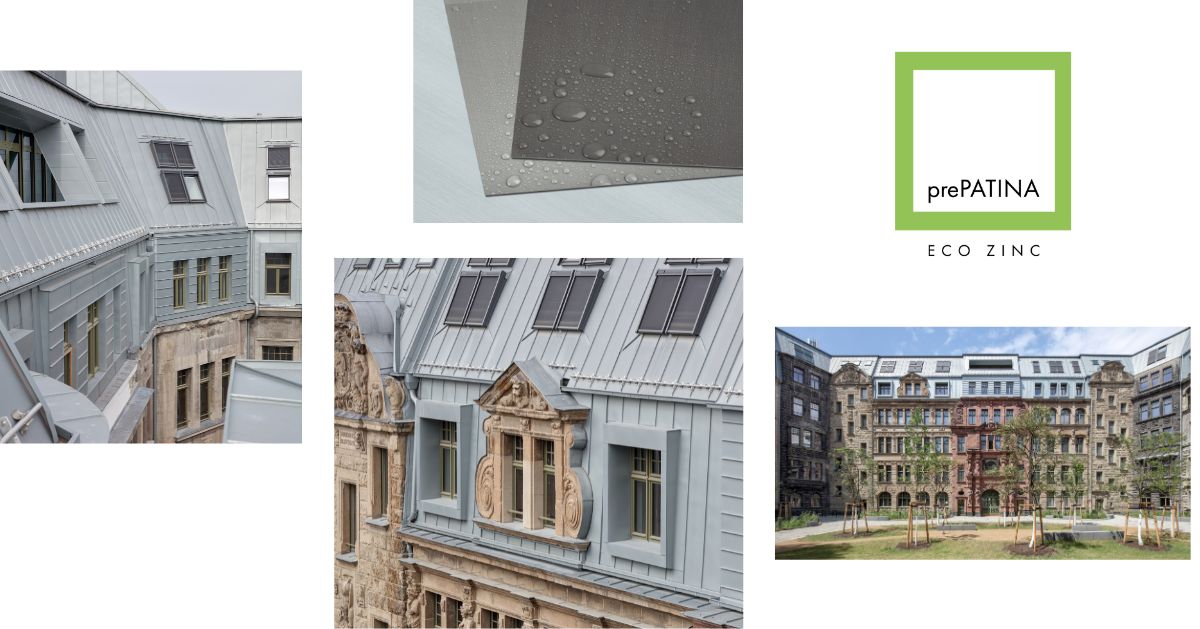
A material that tells a story. As a connecting element between the historic facade and the new roof structure, the material blends seamlessly into the architecture. RHEINZINK-prePATINA ECO ZINC blue-grey was used, whose pre-weathered surface has an elegant, understated appearance right from the factory. As a result, the roof appears harmoniously integrated into the overall design from the very beginning, while the natural patina continues to develop under the influence of the elements. Genuine titanium zinc that can be precisely folded, shaped, and soldered—ideal for demanding roof and facade restorations with a lasting, elegant appearance.

Historical Heritage Redefined
Titanium-Zinc Bridges the Past and Present
The blue-grey titanium-zinc roof by RHEINZINK bridges the past, present, and future—and restores the building to what it once was: an architectural gem of Berlin! The decision to use a uniform roofing material for all parts of the building was made in close consultation with the historic preservation authorities. Research had revealed that the street-facing sides were originally covered with copper and the courtyard-facing roof surfaces with tiles. However, to ensure a cohesive overall appearance, all parties involved agreed on a modern reinterpretation of the historical material palette using pre-weathered blue-grey titanium zinc. For investor Cresco Capital, the vision was not merely to preserve the building’s historical substance, but to adopt a contemporary perspective. “We want to keep the history visible while creating a building that has a sustainable future,” emphasizes project manager Alexander Bürk. Sustainability and ESG compliance were key criteria.
Technical details
Angled Standing Seam
When Technology Makes a Statement
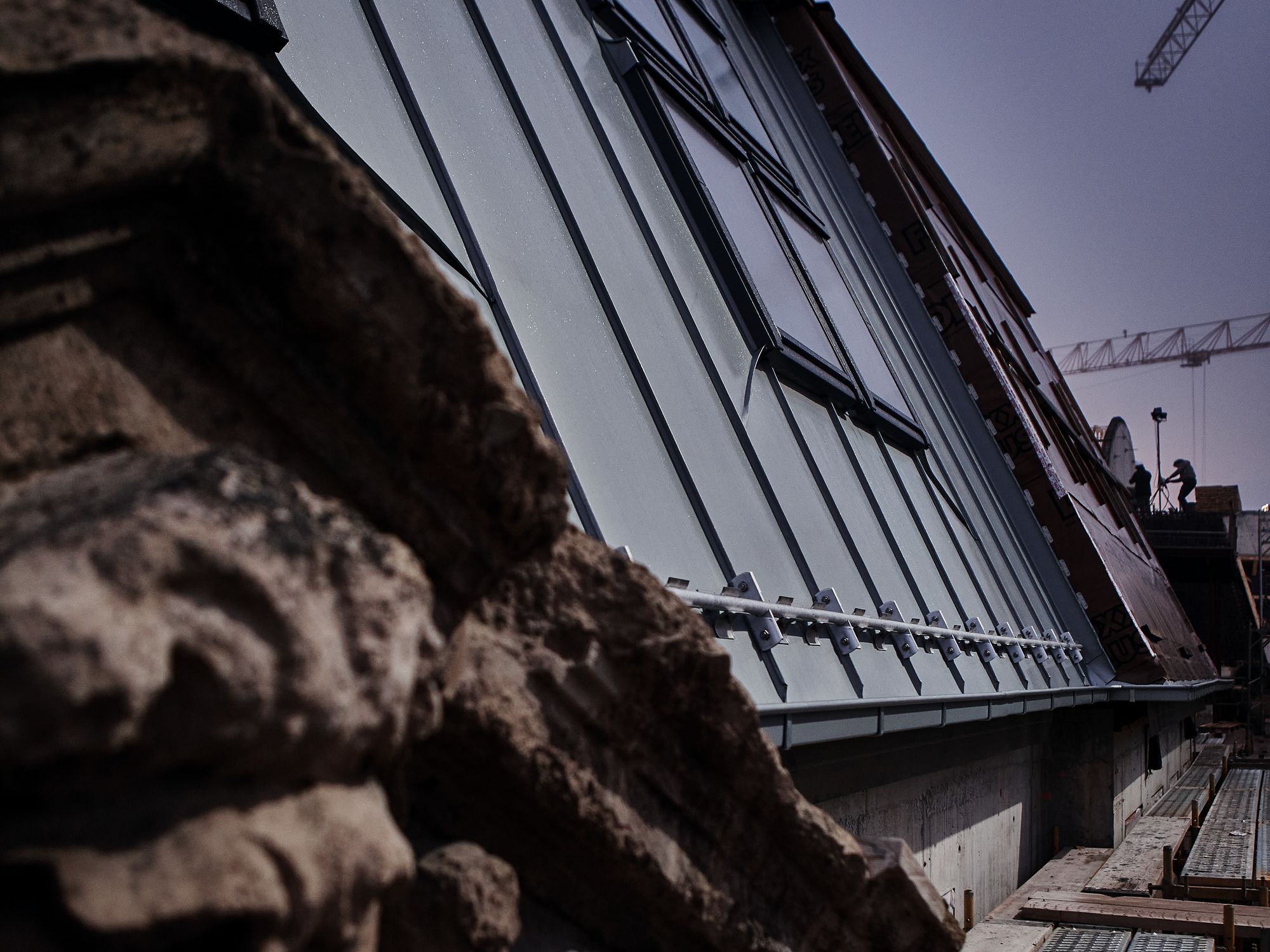
The angled standing seam system is a proven installation technique for roof surfaces with a clean, linear design. When combined with RHEINZINK-prePATINA ECO ZINC blue-grey, it creates a durable, high-quality surface with a uniform, pre-weathered appearance. The standing seam technique forms the core of many RHEINZINK applications. It enables clean lines, concealed fasteners, and rainproofing. Thanks to the material’s high ductility, even complex geometries, radii, and special details can be precisely implemented. Thermal linear expansion is accommodated structurally, while rear-ventilated systems ensure structural reliability and longevity. For facades that make a statement. For buildings that stand the test of time. For architecture that quietly impresses and endures.

Fastening & Special Features
Concealed Technology. Visible Quality.
The system is fastened to the substructure using concealed fasteners. Fixed and sliding clips perform precisely defined functions: They secure the system while also allowing the material the necessary space to accommodate thermally induced linear expansion. The result is a tension-free, permanently flat surface—without visible fasteners and without compromising on design. Both small and large surfaces can be strikingly structured or highlighted. The angled standing seam can be installed vertically or horizontally on the facade, with a variety of panel widths available. Mirror-like patterns can also be used as a design element through strategically placed transverse seams in the individual panels.
Crafts
Above the Rooftops of Berlin
An Elaborate Project for a Unique Roof
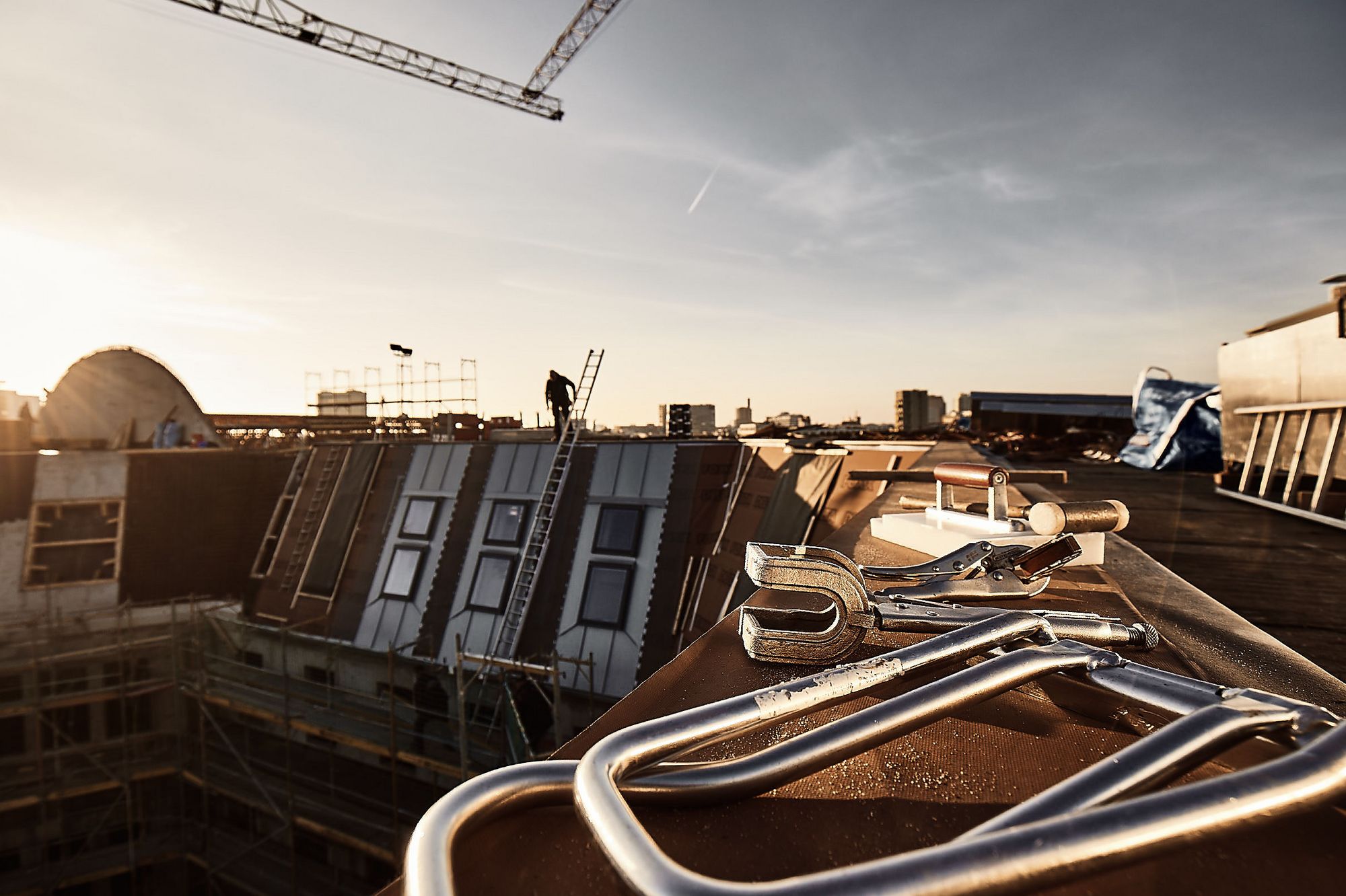
The Berlin-based roofing company Holzapfel & Schulze undertook the roofing work on the historic Victoriahöfe. Thomas Holzapfel, Sebastian Schulze, and a team of 20 skilled workers were responsible for the elaborate roofing of the historic, protected building. A total area of approximately 3,400 m² was covered with RHEINZINK-prePATINA ECO ZINC in blue-grey over several construction phases from 2019 to 2023.
“It’s a privilege to work on a building like this.”
Sebastian Schulze
Holzapfel & Schulze GbR Roofing Company
The Roofers of the Victoriahöfe - Learn More
Great Responsibility, Great Joy – with RHEINZINK
Craftsmanship on Historic Monuments
For the craftsmen at Holzapfel & Schulze, the “Victoriahöfe Berlin” project was a special challenge. “You can never plan everything exactly in advance. A lot of things only take shape once you’re working on the building itself. We had to customize every sheet metal part individually so that it would fit perfectly with the historic character,” reports Managing Director Sebastian Schulze. The front spires in the courtyards, which were restored, required the highest level of precision. “There’s a lot of detailed work involved. It was challenging, but in the end, it turned out really well.”

Functional roof construction for any pitch
Reliable construction, long-lasting performance
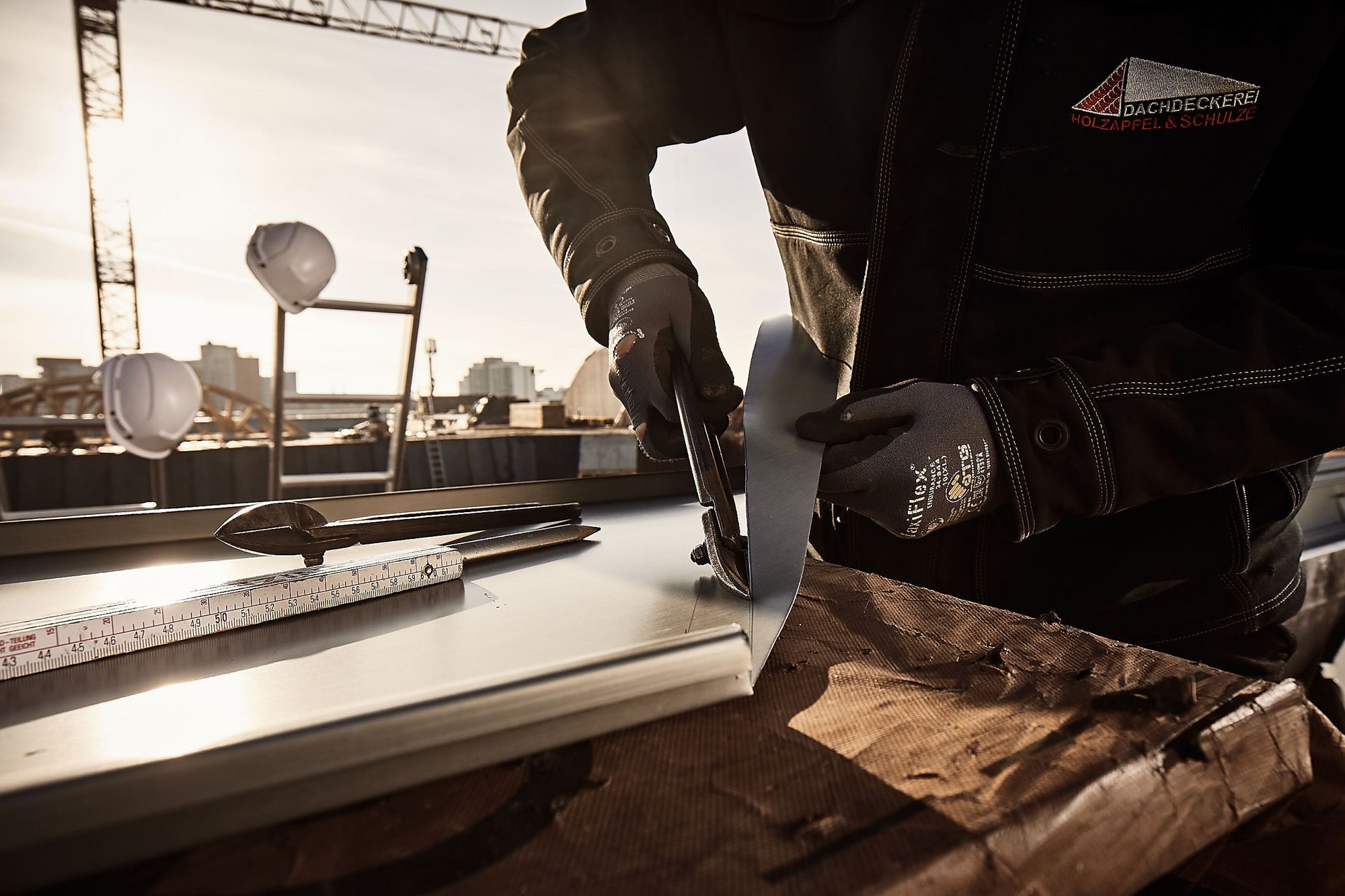
Holzapfel & Schulze began work on the newly constructed reinforced concrete roof support structure, which was topped with a vapor barrier and 180 mm of roof insulation. The insulation layer is covered with a roof underlayment. Next comes the counter-battens layer, which creates the ventilation space, followed by the load-bearing sheathing. To protect the structure from the elements during the construction phase, a continuous separation layer was installed as the first step. As construction progressed, the RHEINZINK-AIR-Z textured mat was installed, ensuring the functionality of a textured separation layer. This combination of separation layers ensures the safe drainage of any condensation and also improves the sliding ability of the panels during thermal expansion and contraction.
Harmony in the details
Custom Work and Traditional Folding Techniques
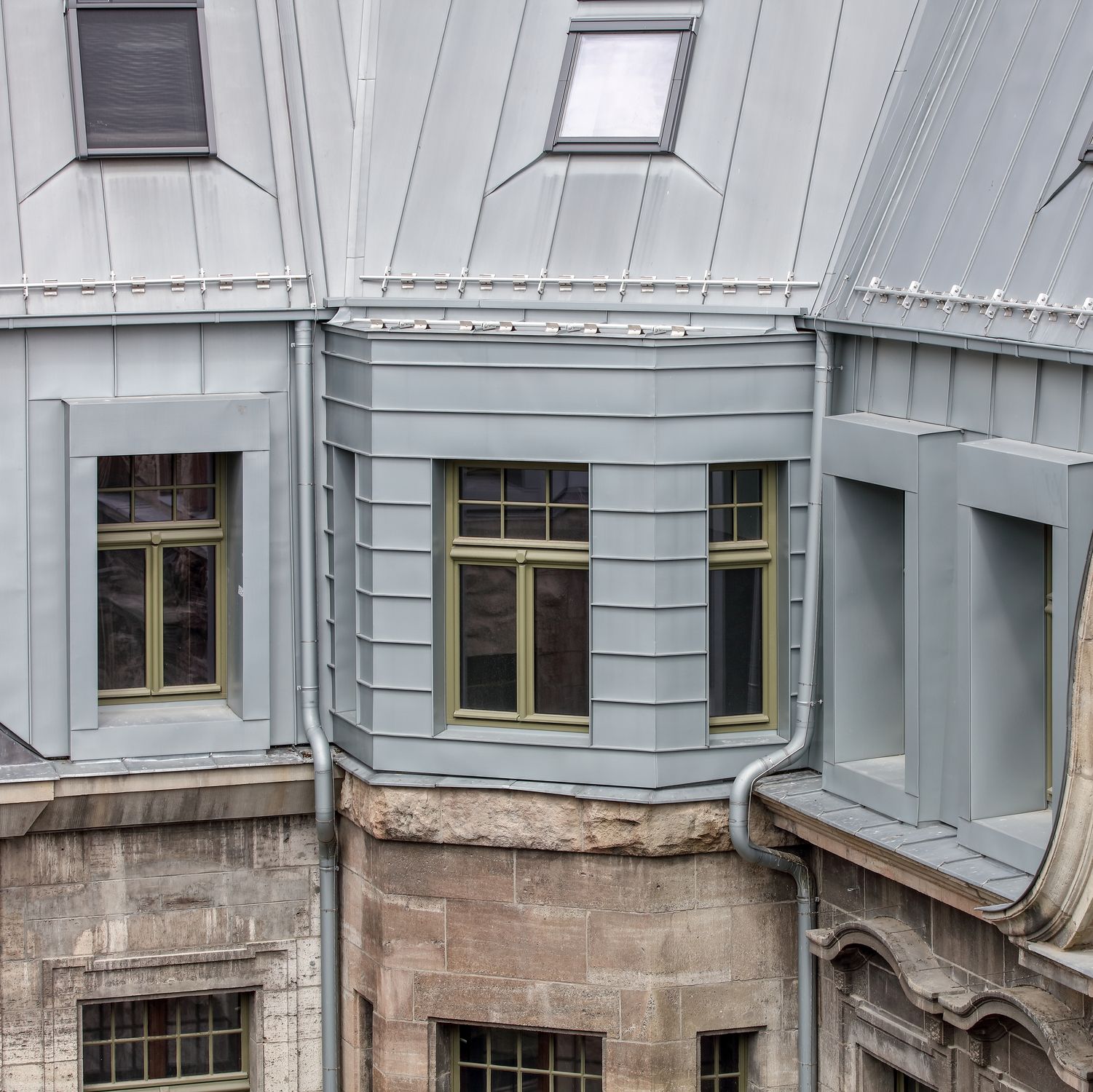
One challenge on the highly segmented roof was the roof layout, which had to be redesigned for each section between the gables, skylights, and loggias. As a result, there was no standard width for the roof panels; instead, they were predominantly cut to size and seamed on-site from 670-mm-wide strips, each with its own individual dimensions. Despite this variety, the roofing appears cohesive because careful detailed planning ensured that the seams run in a straight line across every section, from the main roof to the mansard. A harmonious line pattern was also intended on the courtyard sides, where approximately 180 skylights had to be integrated into the main roof surfaces of the various building wings. For this reason, the skylights were not framed with standard flashing frames but were instead fitted using traditional folding techniques. Depending on their position, the skylights are equipped with electric drives and sunshades.
precision in Titanzink
Implemented with invisible precision
The downspouts of the roof drainage system run along the front of the facade, just like the historic original. Because they are consistently designed as cornice gutters, the rain gutters blend discreetly into the architecture and are not recognizable as separate structural elements. The same applies to roof ventilation: Perforated metal sheets for ventilation are located at the base of the mansard roof, at the junction with the main roof surfaces, and at their upper ends; these are not visible from the normal viewing position below. The choice of material was particularly crucial given the finely structured roof design.
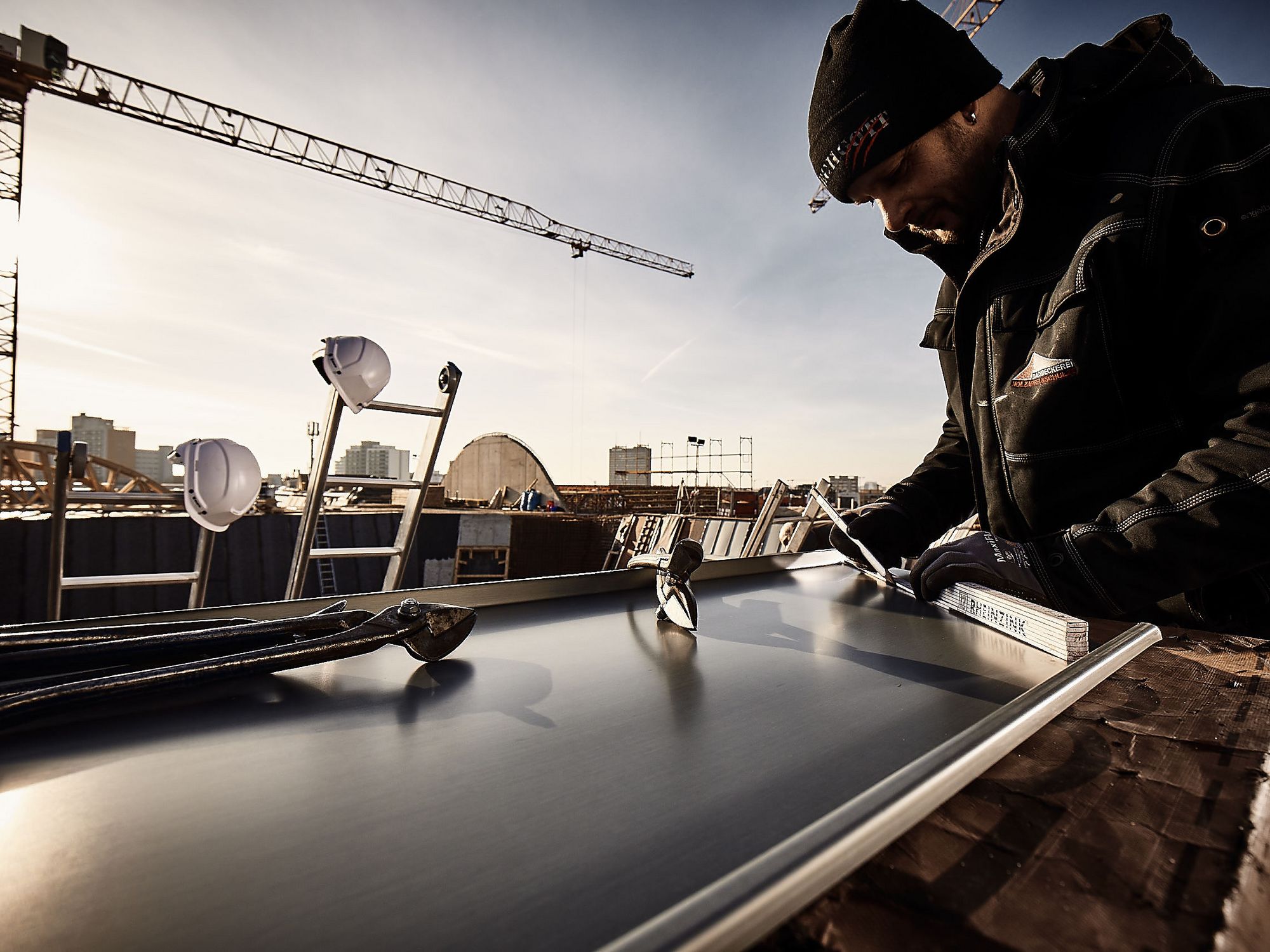
RHEINZINK-prePATINA ECO ZINC blue-grey provided a material that impressed with its high-quality appearance and installation properties. The surface ensures a uniform overall appearance. In the case of complex connections and custom-cut panels, the pre-weathered material also demonstrated its reliable workability: it is stable to handle, easy to fold, and particularly well-suited for clean, precise detailing. This made it possible to implement the roof’s challenging geometry with technical precision and visual harmony throughout—fully in line with historic preservation requirements and the overall architectural impression.
roof as a design element
aesthetics in the Details
It is precisely these details that define the aesthetic quality of the roof. It is characterized by the understated appearance of the materials and the uniform arrangement of the loggias and skylights, while at the same time highlighting the new decorative gables. Even though the Victoriahöfe are no longer the largest office building in the world following the losses sustained during the war, the sensitive restoration and modernization have succeeded in recapturing the opulent impression originally envisioned by architect Wilhelm Walther—while all contemporary structural elements remain clearly recognizable as modern architectural features thanks to their design language and titanium-zinc roofing.

Location | Construction Sign
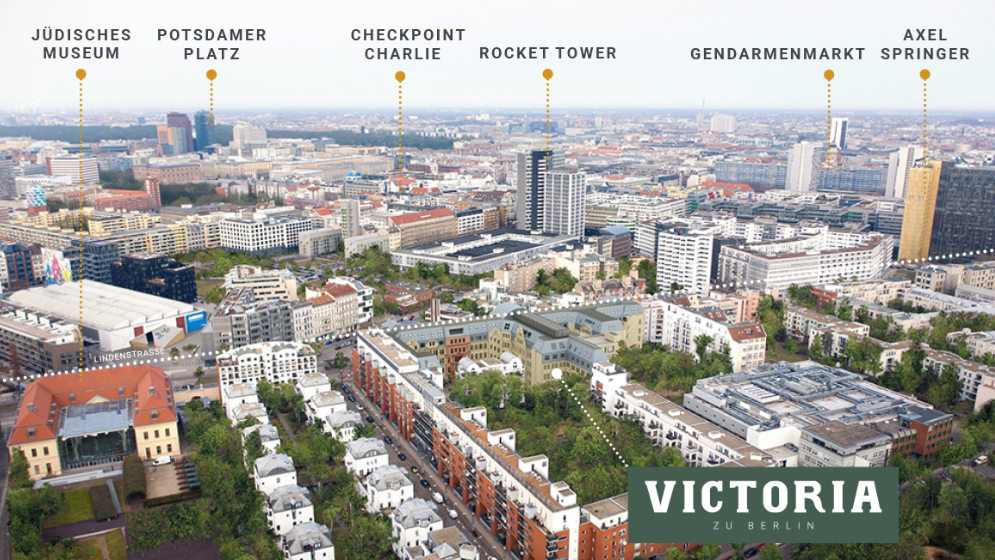
The Victoriahöfe from the air
Prominent located in Kreuzberg
Located in southeast Berlin, the Victoriahöfe are in the Kreuzberg neighborhood, right next to the Jewish Museum, Potsdamer Platz, and Checkpoint Charlie.
The Rocket Tower and the Gendarmenmarkt are also not far from the former headquarters of Victoria Insurance.
For more information on the Victoriahöfe in Berlin, please visit Cresco Capital.
Construction Sign
| Project: | Renovation of the Victoriahöfe in Berlin in Accordance with Preservation Guidelines |
| Year of manufacture: | 1893-1913 |
| Location: | Berlin |
| Materials and Quantities: | 12 metric tons, RHEINZINK-CLASSIC bright-rolled 48 metric tons, RHEINZINK-prePATINA ECO ZINC blue-grey |
| Architect: | GBP Architekten GmbH, Berlin, Germany |
| Craftsmen: | Dachdeckerei Holzapfel & Schulze GbR, Berlin, Germany |
| Client: | Cresco Capital Victoriahöfe S.à r.l |
| Certification: | Leed Certification sought |
| Historic Preservation: | Highest category |
Photos: Cornelia Suhan; Holzapfel und Schulze GbR Roofing Company
Drone footage: Maximilian Loos; Cresco Capital Projektentwicklungs GmbH
Historical Photos: Cresco Capital Projektentwicklungs GmbH
You are on our global website.
Would you like to stay on rheinzink.com or visit the local RHEINZINK America website?